Peptide Testing: Hplc & Mass Spec Purity Guide Apex
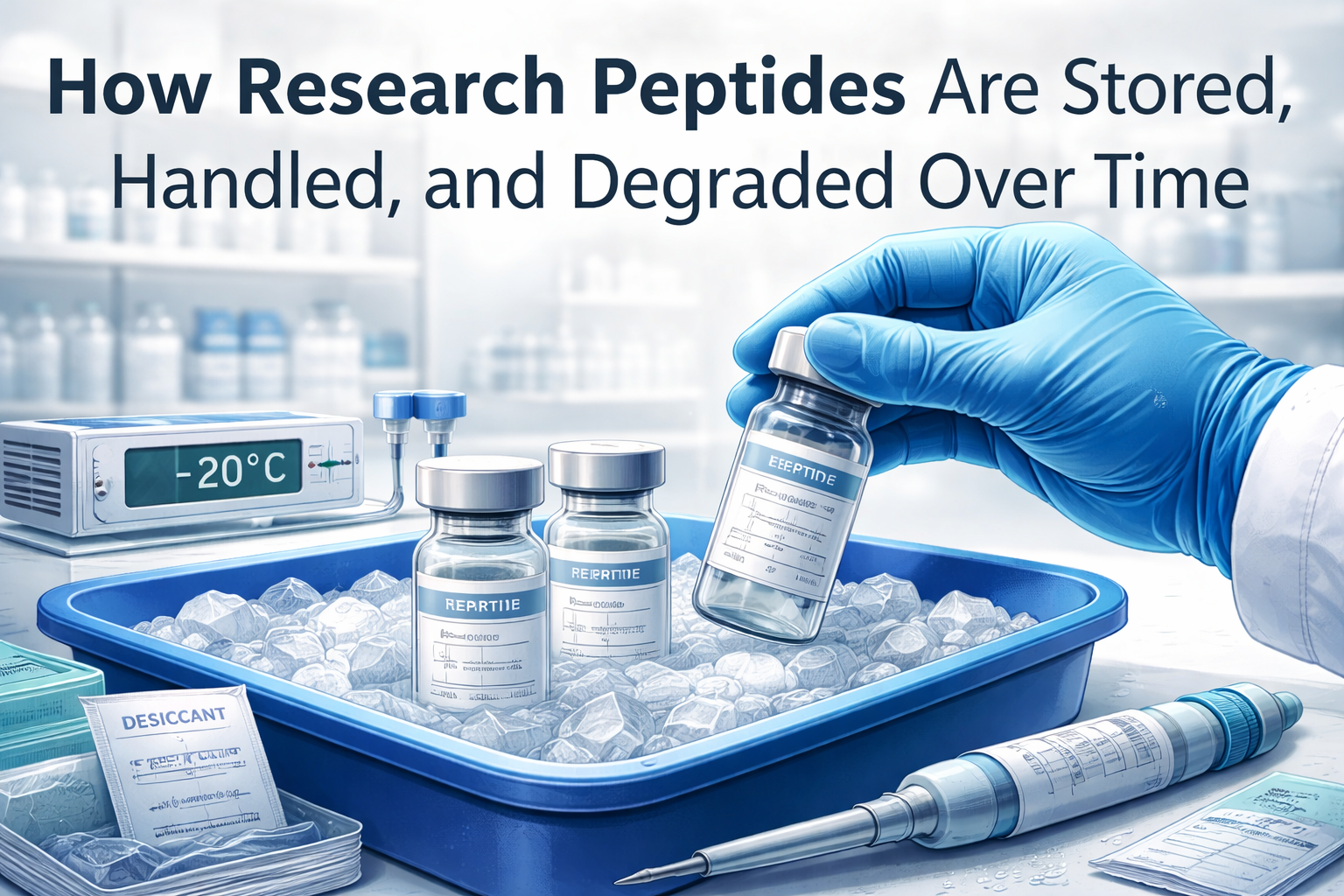
These alterations transform the peptide's organic task and chromatographic profile. Peptides are sensitive to temperature level, light, and enzymatic settings, making them susceptible to deterioration, which affects effectiveness. BOC Sciences provides increased security, light stability, and chemical destruction experiments to systematically examine solution security risks.
- All peptides sold by Pinnacle Research laboratory are designated specifically for in-vitro lab study use and are not for human consumption.We supply all the technological details and guidelines for each and every action of peptide synthesis and analysis.Our goal is to sustain researchers with high-purity, verified substances that fulfill the needs of contemporary clinical study-- nothing more, nothing much less.
Pinnacle Lab Editorial Group
For scientists, getting validated peptides isn't simply a rule-- it's the structure of reputable experiments and research reproducibility. Poor-quality peptides (those with undetected contaminations, incorrect sequences, or weakened components) can result in deceptive data and irreproducible results. As a matter of fact, healthy proteins and peptides are among the most extensively made use of lab reagents, yet researches have shown that their top quality is often poor, causing bad information reproducibility. Starting with correct lab recognition is consequently a vital part of a researcher's quality assurance workflow.
One of the most stringent quality, entailing mindful HPLC purification-- often multiple rounds-- and strenuous QC. Needed for quantitative studies, architectural biology, in vivo research models, and any application where even percentages of contamination might influence results. This is the grade where the cost increases most dramatically, because attaining that last 1-- 3% of purity calls for discarding a considerable fraction of the synthesized material. A deletion peptide missing out on a solitary residue may still bind to the exact same receptor, yet with different fondness or selectivity. In concentration-response experiments, these impurities can shift curves, flatten plateaus, or introduce biphasic habits that obscures the true activity of the target substance. The isoelectric point (masterpiece) is an important parameter for comprehending peptide solubility and actions in different atmospheres.Where Can I Purchase Laboratory Evaluated Peptides?
It's possible to have a peptide that is, claim, 95% pure by HPLC and yet the internet peptide content is something like 70% of the powder's weight (the remainder being water and salts). Do not be alarmed-- this is regular and is generally determined by separate evaluations (like amino acid analysis). Peptide purity is most frequently figured out by high-performance liquid chromatography (HPLC) with a detection wavelength of 220 nm, which is ideal for discovering peptide AOD-9604 bonds. This technique divides peptides from pollutants and measures both target peptides and impurities, making certain top quality samples for research.With each other, these analytical approaches provide the proof base for ending that a peptide batch appropriates for research usage. An additional relevant term you might experience is internet peptide material, which is different from pureness. Web peptide material describes how much real peptide (by weight) is in the vial about non-peptide components like water, counter-ions (e.g., TFA), or barrier salts.Keeping a high level of purity is essential due to the fact that impurities can influence bioassays or responses. For instance, truncated peptides or chemically changed side-products might bind to targets or produce negative effects that puzzle your outcomes. Particularly customized peptides or cyclic peptide sequences are hard to confirm, which impacts quality control. We combine LC-MS/MS and enzymatic food digestion evaluation to precisely validate the sequence Get more info and adjustment websites of non-natural changed peptides. Recurring organic solvents, steel ions, or by-products from synthesis might trigger hazardous adverse effects.