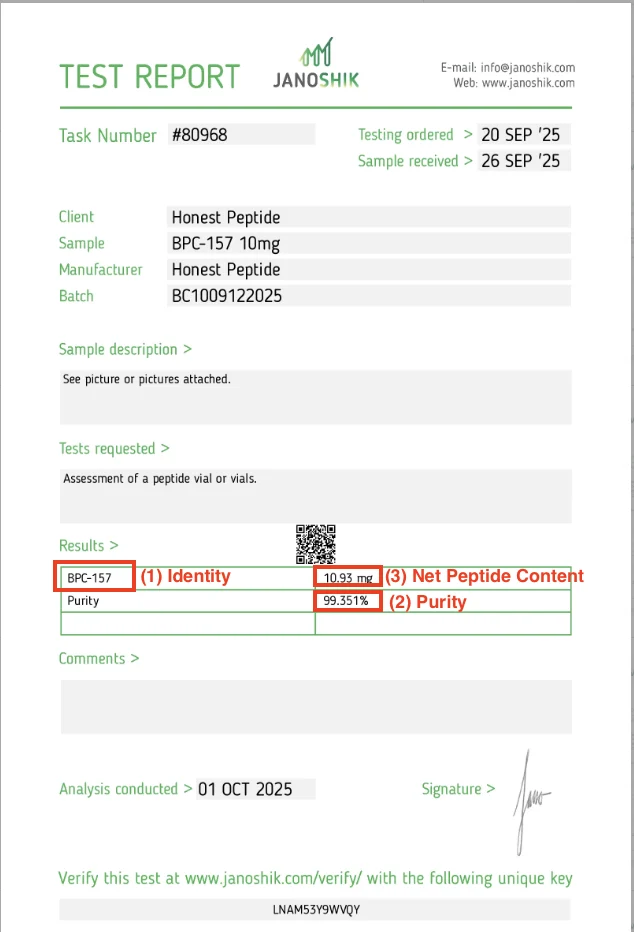
Verified > 99% Lab-grade Peptides The main approaches for gauging peptide pureness are High-Performance Liquid Chromatography (HPLC) and Mass Spectrometry (MS). HPLC separates the target peptide from pollutants, evaluating pureness. MS validates the peptide's identification by gauging its Directpeptides specific mass. These two methods offer corresponding information and are the gold requirement in the peptide sector. Peptide pureness implies the portion of the target peptide sequence in an example contrasted to impurities. It's crucial because impurities can alter research outcomes, affect drug safety, and concession speculative reproducibility, making high pureness important for exact scientific research. Notably, this purity number is generally determined after filtration (e.g. by HPLC) and focuses on peptide pollutants-- it doesn't count residual water, salts, or counter-ions in the dried peptide powder. In other words, the pureness percentage has to do with the structure of peptide species in the sample, not the weight contribution of water or salts. If you've ever acquired a synthetic peptide for a laboratory experiment, you've likely noticed a pureness portion on the certificate of evaluation-- generally values like 95%, 98%, or perhaps 99%. Peptide purity is an important top quality metric that informs you what portion of a peptide example is the desired product versus undesirable byproducts. In basic terms, a peptide listed as 95% pure is composed mostly of the target peptide (95%), with the staying ~ 5% comprised of impurities. These contaminations can consist of things like reduced or truncated series, removal variations, oxidized residues, or other small side-products from the synthesis procedure. It acts as a suggestion and legal disclaimer that the item is not a therapeutic or palatable. Trustworthy peptide vendors always mark their products this way and give high quality reports with HPLC and MS data to back up the pureness degree. As long as you obtain peptides from a relied on source that provides a total certificate of evaluation, you can be confident in the peptide's pureness quality and use extent. When you see peptides promoted as "research-grade," it refers to their intended usage and the degree of manufacturing oversight.
Nanoparticle Physicochemical Home Evaluation
What equipment is utilized to check peptide purity?
Peptide pureness is regularly established by HPLC (high efficiency liquid chromatography). This approach makes it possible for splitting up and family member quantification of each peptide manufactured. If coupled to a mass spectrometer (MS), this supplies molecular mass/ identity details of the target peptide and going along with contaminations.
Hexarelin Reconstitution Calculator: Bac Water Volumes & Focus Tables For Lab Research Study
Maintaining a high degree of purity is important due to the fact that impurities can influence bioassays or responses. As an example, abbreviated peptides or chemically changed side-products may bind to targets or create adverse effects that confound your results. Subsequent destruction from incorrect storage space, temperature exposure, or contamination during handling can lower top quality. The peptide storage overview covers correct handling that preserves top quality between testing and usage.Questions Researchers Ought To Inquire About Pureness Screening
- Kai is the lab's AI study aide-- powered by Claude (Anthropic) and GPT (OpenAI)-- in charge of technical writing, literature testimonial, COA verification, and compound evaluation.The test output is commonly delivered as a binary identified or not discovered, however a genuine tester needs to also be able to generate metal-by-metal quantitative detail upon request.A premium chromatogram has a single, balanced primary height with a flat standard on either side.By utilizing exterior labs for confirmation, vendors get rid of prejudice and maintain scientific reputation.Peptide testing is effective, but researchers ought to review the range of each method thoroughly.